
The Cabin Is the Most Secure Boardroom in Your Organization — or the Least
THE ROBAI™ FRAMEWORK SERIES • ARTICLE 6 OF 7 • ORGANIZATIONAL RESILIENCE
By Bas de Bruijn, Head of Aviation Advisory Services, Clay Lacy Aviation
There is a conversation that happens thousands of times every year on commercial flights. A senior executive, seated in business class, laptop open or phone pressed to their ear, discussing something that should not be discussed in a room full of strangers. An acquisition target. A client who is about to defect. A restructuring that hasn’t been announced. A legal matter that hasn’t been resolved.
They are not being reckless. They are being productive. The flight is time they have, the work is pressing, and the alternative — sitting in silence for four hours — feels like waste.
What they are also being, without realizing it, is a security liability.
What the research found
The research examined business travel stress and employee well-being across commercial and corporate aviation contexts. One finding stood out for a reason beyond its original scope.
Organizational security — the concern that sensitive information, conversations, and work product could be exposed in a commercial travel environment — surfaced in 83 percent of interviews with C-suite executives and senior vice presidents. It was one of the most consistently reported themes in the entire study. It had not been the primary focus of the research. It emerged anyway, because it was present in the lived experience of almost every executive who traveled frequently on commercial airlines.
They described crowded terminals where calls had to be abandoned mid-sentence. Seatmates close enough to read a screen without trying. Open-plan cabins where the boundary between private business and public space had effectively ceased to exist. One participant described it directly:
“Even if you’re in business class, there can still be a lot of distractions like angry people, drunk people, or snorers. You’re trapped in a vehicle with a group of strangers. For our domestic flights, we all fly coach, so there’s the stress of being that close to people for hours. Especially at busy airports, it’s always packed. You can’t hear the speaker on a Zoom or phone call because there’s often a lot of background noise. It seems like they haven’t considered the traveler’s experience. And then you’re short with TSA workers. It’s pretty bad.”
— Research participant
This is not a fringe concern. Security expert Luke Bencie documented in Harvard Business Review that everyday business travelers are among the most accessible targets for corporate espionage — precisely because they are productive, distracted, and surrounded by people whose affiliations are unknown. The FBI and NSA have both published advisories warning organizations that commercial aviation environments present meaningful intelligence-gathering opportunities for state and commercial actors alike.
What the research adds to that picture is the organizational dimension: this is not an abstract risk that executives read about. It is a condition they manage, daily, by suppressing the very conversations and work that their organizations need them to have.
Two vulnerabilities, one environment
The security dimension of corporate aircraft access operates on two distinct levels, both of which carry consequences that most organizations have never brought into a business case.
The first is information confidentiality. Commercial travel creates conditions in which sensitive conversations are suppressed, interrupted, or compromised. Executives who need to discuss a pending transaction cannot do so openly without risk. Those who need to review confidential documents on a visible screen must choose between security and productivity. Those who need to conduct a sensitive call in a departure lounge must find a quiet corner that, in most major airports, does not exist.
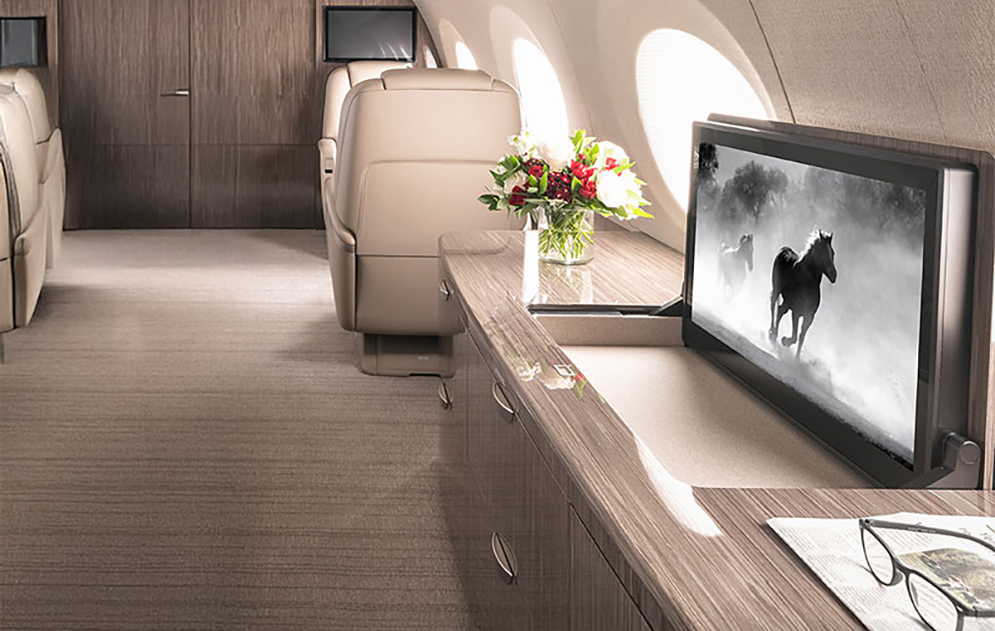
The corporate aircraft substantially addresses this. The cabin is a controlled environment. The manifest is known. Everyone on board carries the same organizational obligations. One research participant captured it with a phrase that has stayed with me: “a legitimate corporate environment, not a hodgepodge of strangers going to the same destination.”
Work that cannot happen on commercial flights happens in a corporate cabin. Calls that would be deferred get made. Decisions that would wait get discussed. That restored capacity has direct value — and it sits entirely outside the time-savings calculation that most flight department business cases have ever attempted to capture.
The second is organizational security risk. Corporate espionage is not a theoretical threat for organizations operating in competitive industries. Technology, financial services, pharmaceuticals, defense, and professional services all face environments in which competitive intelligence about M&A activity, client relationships, pricing strategy, and key personnel decisions carries real market value.
The question is not whether that risk exists. It is whether commercial travel amplifies it — and whether corporate aircraft access meaningfully reduces it.
The evidence strongly suggests yes — both from the research and from the broader security literature. A senior executive discussing a pending acquisition on a commercial flight is operating in an environment optimized for neither privacy nor security. The same executive in a corporate cabin is operating in one where every variable is controlled by the organization.
The financial consequences of an information breach are notoriously difficult to quantify in advance and devastatingly clear in retrospect. The ROBAI™ framework brings a structured lens to this exposure — one that translates a security consideration most organizations have never modeled into the financial language that belongs in a conversation about enterprise value.

The fifth driver — and why it belongs in the framework
Executive Productivity, Decision Velocity, Talent Retention, and Organizational Effectiveness each describe a way in which corporate aircraft access creates value for the organizations that use it. Organizational Resilience describes something different: a way in which it prevents value from being destroyed.
That distinction matters — though Organizational Resilience is not the only driver in this framework concerned with protection. Talent Retention also operates as a value protector, estimating the replacement costs and institutional loss avoided when corporate aircraft access reduces executive misfit and attrition. What Organizational Resilience adds is a different category of protection: not the cost of people leaving, but the cost of information leaving. Both are forms of avoided loss. And in most enterprise risk frameworks, both are systematically underweighted until something goes wrong.
The research found that senior executives already know this at an intuitive level. They adjust their behavior on commercial flights constantly — suppressing calls, closing laptops, choosing silence over productivity because the environment doesn’t allow anything else. The cost of that adjustment is real, even if it has never appeared in a utilization report or a budget review.
Corporate aircraft access does not just give executives a more comfortable place to work. It gives them a secure one. For organizations where the conversations that happen in transit carry genuine strategic weight, that security is not an amenity. It is a material organizational consideration — one that, like the other drivers in this framework, belongs in the conversation about what the aviation function contributes to the enterprise.
Organizational Resilience is the fifth driver in the ROBAI™ framework — and the one most directly grounded in the lived experience of the executives your aircraft serves. The final article in this series brings the full framework together. If you’d like to start that conversation now, Clay Lacy Aviation Advisory Services is ready. Get in touch.