
06.09.26-Articles-Corporate

They’re Not Questioning Your Aircraft. They’re Questioning What They Can’t See.

THE ROBAI™ FRAMEWORK SERIES • ARTICLE 7 OF 7 • CONCLUSION

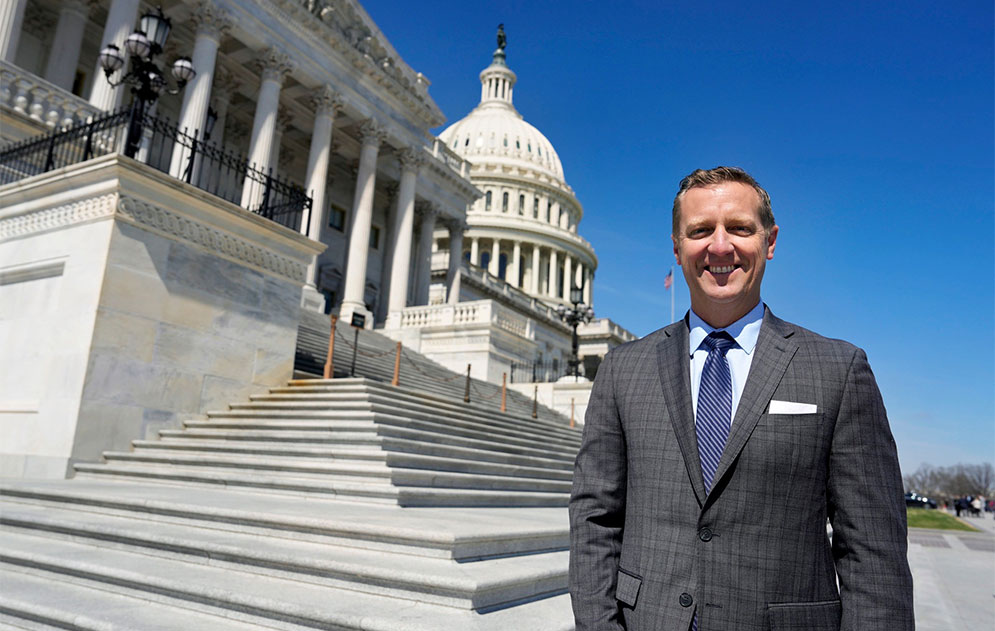
By Bas de Bruijn, Head of Aviation Advisory Services, Clay Lacy Aviation

Six articles. Five value drivers. One argument: corporate aviation creates significantly more value than the industry has ever known how to measure — and the research foundation now exists to begin demonstrating it.

In the first article in this series, we named the reason the familiar arguments have always fallen short: the Tangibility Paradox. Costs are immediately tangible — measurable, countable, easy to put on a spreadsheet. Value is real but unquantified. And legitimacy — the verdict C-Suites, boards and investors render on whether the capability is justified — hangs in the gap between the two.

The six articles that followed were the evidence. Five drivers, each one demonstrating a different dimension of value that has been real but unquantified — in executive performance, in deal velocity, in talent retained, in organizational alignment built, in strategic exposure avoided.


The paradox, restated

The Tangibility Paradox™ — The structural challenge every corporate aviation leader navigates, rooted in Trompenaars’ dilemma reconciliation theory: cost is always tangible, value is real but unquantified, and legitimacy is continuously earned or eroded in the gap between them.

The Tangibility Paradox has a simple structure. Costs are immediately tangible — easy to find, easy to measure, and easy to question. Value is real but unquantified — recognized by every executive who relies on the capability, but resistant to the financial language that boards and CFOs require. Legitimacy sits in the balance between the two, and because cost is always tangible while value is not.

This is why the paradox is permanent. Cost reasserts itself every budget cycle. Value has to be re-demonstrated every time leadership changes, a new investor arrives, or a governance review begins. Legitimacy is never fully secured — it is continuously earned or continuously eroded. The tension never reaches a final equilibrium. It requires ongoing navigation.


The resolution is not better arguments. It is better visibility.

The answer to the Tangibility Paradox is not to argue harder for value that resists measurement. It is to make that value more tangible — in language that is credible to a CFO, defensible to a board, and grounded in research that can withstand scrutiny.

That is the problem ROBAI™ was built to address. Not to generate a precise number that wins a budget argument, but to translate real but unquantified value into the financial and organizational language that legitimacy actually requires. The five drivers — Executive Productivity, Decision Velocity, Talent Retention, Organizational Effectiveness, and Organizational Resilience — are not definitive claims. They are research-grounded value indicators, each traceable to peer-reviewed evidence, each expressed in EBITDA and enterprise value terms that belong in a conversation about organizational performance, not overhead management.

When value becomes tangible, the paradox does not disappear. But it becomes governable. The conversation shifts from defense to strategy. The flight department stops justifying its existence and starts demonstrating its contribution. And legitimacy — across governance, optics, policy, safety, and stakeholder perception — becomes something the organization actively builds rather than perpetually scrambles to protect.


The standard worth building toward

The organizations that govern their aviation function most effectively are not the ones with the lowest cost per hour or the most compelling EBITDA estimates. They are the ones that have learned to hold cost, value, and legitimacy in productive tension — continuously, as conditions change — and to build a capability where all three reinforce rather than undermine each other.

That is disciplined strategic stewardship. It begins with making value tangible. And it never fully ends.

If the six articles in this series changed how you think about what your aviation program returns — the next question is whether the way you govern it makes that return visible to the people whose judgment matters most.

That is where the conversation with Clay Lacy Aviation Advisory Services begins. Get in touch.


ABOUT THE AUTHOR
Bas de Bruijn serves as Head of Advisory Services at Clay Lacy Aviation, where he advises corporate and private flight departments on aligning aviation operations with broader business and organizational objectives. His peer-reviewed research, published in the Journal of Air Transport Management, examines how business aviation influences executive well-being, engagement, and organizational performance. His work reframes corporate aviation not as a luxury or perk, but as a strategic resource that preserves executive energy, supports sustainable performance, and delivers measurable value through a human capital lens.