

06.09.26-Articles-Corporate

What Does It Actually Cost to Lose a Senior Executive?

THE ROBAI™ FRAMEWORK SERIES • ARTICLE 4 OF 7 • TALENT RETENTION

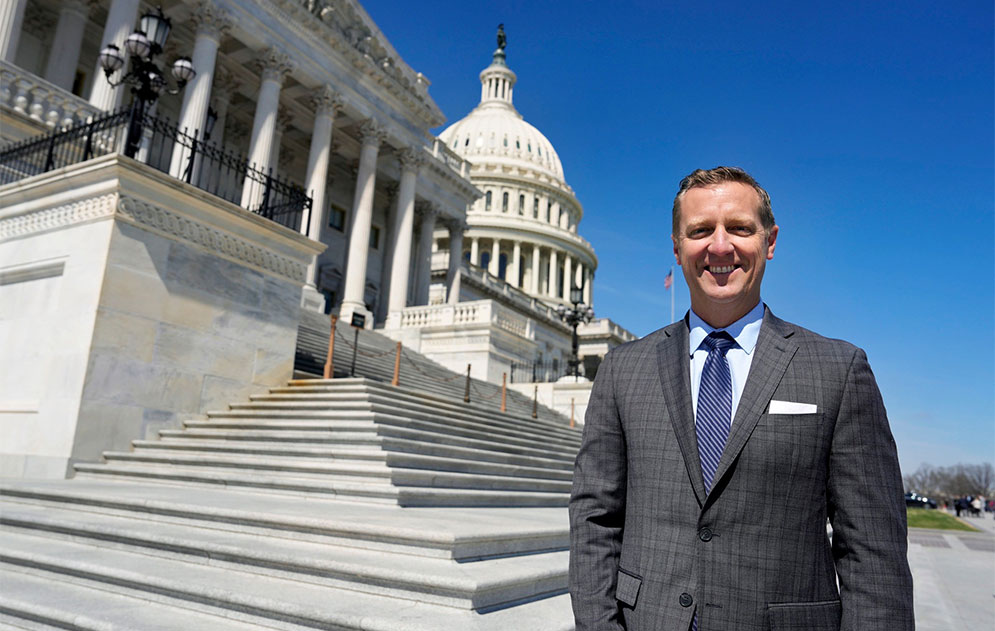
By Bas de Bruijn, Head of Aviation Advisory Services, Clay Lacy Aviation

It rarely happens all at once. A senior leader starts declining trips. Their engagement in cross-functional work quietly pulls back. They stop raising their hand for the high-visibility projects. And then, one Tuesday morning, they walk into the CHRO’s office and say they’ve accepted another offer.

By the time the resignation lands, the organization has usually been losing that person for months. The trigger is rarely compensation. It is, far more often, exhaustion — a sustained misalignment between the demands of the role and what the individual needs to sustain their performance and their life outside of work.

Business travel is one of the most consistent contributors to that misalignment. And it is one that most organizations have never seriously modeled as a financial risk.


What organizational psychology tells us about travel and attrition

The Person-Environment Fit Model — a foundational framework in organizational psychology — describes a well-documented phenomenon: when the demands of a professional environment consistently conflict with an individual’s personal values, needs, and life priorities, the result is disengagement, burnout, and eventually departure. The fit between person and environment is not a soft concept. It is one of the most robust predictors of retention in the research literature.

The research applies this framework directly to the corporate aviation context. What it found is both intuitive and underappreciated: demanding commercial business travel is one of the most consistent sources of person-environment misfit for senior leaders. The time pressure, the unpredictability, the accumulated work-family conflict that builds across weeks and months of commercial travel — these are not incidental inconveniences. They are structural stressors that erode the fit between a high-performing executive and the role they occupy.

The research documented this in the voices of the executives themselves. Missed family events. The mental arithmetic of trying to be home for something that matters while managing a schedule that doesn’t accommodate it. The particular exhaustion of returning from a demanding trip to find that work and family obligations have both accumulated in your absence, and that there is no recovery window before the next departure.

Over time, that erosion compounds. And at some point, for some executives, it tips.


The reversal the research also found

What makes this finding strategically relevant — rather than simply sobering — is that the research identified the reversal as clearly as it identified the problem.

When executives experienced meaningful control over their travel environment, the stress indicators diminished. Work-family conflict decreased. The sense of being caught between professional obligation and personal life — the defining feature of the misfit the model predicts — was significantly reduced. Participants described not just a better travel experience, but a different relationship with the demands of their role. One that felt sustainable in a way that commercial travel had not.


In the language of the Person-Environment Fit Model, corporate aircraft access restores the fit. It does not eliminate the demands of a senior leadership role. It removes one of the most persistent sources of misalignment between those demands and the person carrying them.

— Bas de Bruijn


The financial variable most companies have never modeled

Here is where the conversation shifts from organizational psychology to enterprise value — and where most organizations have a significant blind spot.

The cost of executive attrition is not the recruiting fee. It is the accumulated loss of institutional knowledge, strategic relationships, and organizational continuity that leaves with the person. It is the eighteen months it typically takes a successor to reach full effectiveness in a complex senior role. It is the downstream effect on the teams, the clients, and the initiatives that were anchored to that individual’s presence and credibility.

Within the ROBAI™ framework, talent retention is classified as a value protector rather than a value generator — it estimates the cost of executive departure avoided, not new revenue created. That distinction matters. The replacement cost of a C-suite departure, when fully accounted for, is typically estimated at 150 to 500 percent of annual compensation — a range that reflects search fees, transition costs, productivity loss, and the time a successor requires to reach full effectiveness. For most organizations, that figure has never been formally modeled against the cost of the resources that support retention.

Corporate aviation access is not the only factor in executive retention. But it is one of the few interventions that directly addresses the specific source of misfit the research identifies — and it is one that most organizations already have, or are considering, for other reasons entirely.


A different kind of return

The flight department budget is rarely evaluated against the cost of the talent it helps retain. It probably should be.

Talent retention is not the largest driver in the ROBAI™ framework by estimated output. Decision Velocity and Organizational Resilience typically carry more financial weight in the model. But Talent Retention captures something the other drivers do not: the slow, compounding cost of losing a senior leader that most organizations have never attempted to quantify.

The recruiting fee is the visible part. What sits beneath it is harder to see and far more expensive — the institutional knowledge that walks out, the strategic relationships that attenuate, the eighteen months it typically takes a successor to reach full effectiveness in a complex senior role, the downstream effect on teams and initiatives anchored to that individual’s presence. These costs accumulate quietly, and they rarely appear in the analysis that precedes a retention decision.

When you begin to treat executive attrition as a financial variable — not an HR metric, but a genuine contributor to enterprise risk — the conversation about corporate aviation changes. The aircraft is no longer a cost to be justified against hours flown. It is a resource whose return includes the senior leaders who stayed, performed, and kept building something that mattered.

That is a return worth estimating. And for most organizations, it is one they have never tried.


If you’ve never estimated the retention value of your aviation program, that’s where we start. Clay Lacy Aviation Advisory Services helps organizations connect the dots between corporate aircraft access and the talent that stays. Get in touch.


ABOUT THE AUTHOR
Bas de Bruijn serves as Head of Advisory Services at Clay Lacy Aviation, where he advises corporate and private flight departments on aligning aviation operations with broader business and organizational objectives. His peer-reviewed research, published in the Journal of Air Transport Management, examines how business aviation influences executive well-being, engagement, and organizational performance. His work reframes corporate aviation not as a luxury or perk, but as a strategic resource that preserves executive energy, supports sustainable performance, and delivers measurable value through a human capital lens.